

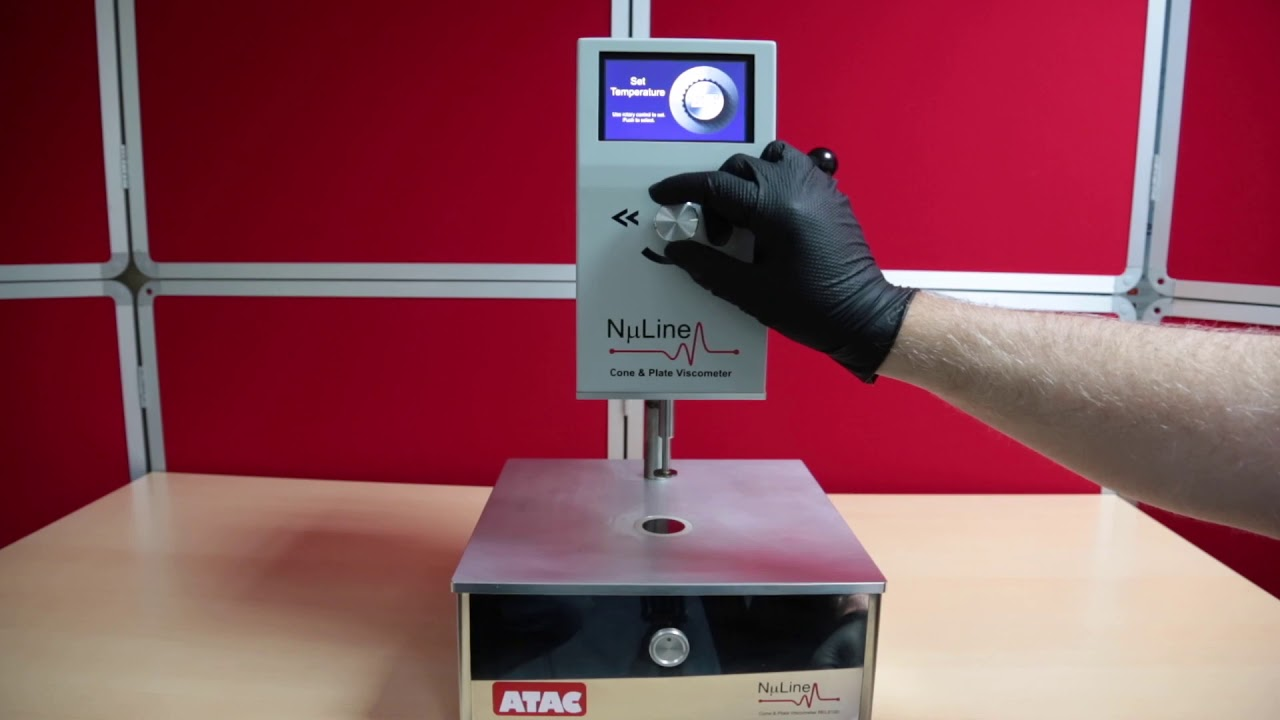
What are High-Precision Viscometers?
High-precision viscometers are essential tools used in laboratories and industrial sectors to measure the viscosity of fluids accurately. These instruments are crucial in sectors like pharmaceuticals, food and beverage, and chemical manufacturing, ensuring quality control and compliance.
What is Viscometry?
The field of Viscometry can be traced back to the earliest origins of fluid dynamics. Leonardo da Vinci studied fluid flow phenomenon as early as the mid to late 1400’s, with Galileo following in his wake over a century later. There is even evidence of a general understanding of viscosity as early as 1500 BCE.
It was Isaac Newton who formalised the study of fluidity that founded the modern scientific approach that followed, which eventually lead to the term Viscosity in the early 20th Century.
What is Viscosity?
Some people define it as the stickiness of a fluid, or the fluid’s resistance to flow, or the measure of resistance to force/stresses being placed upon the fluid. In essence – Viscosity is the study of a fluid’s resistance when placed under or subjected to certain conditions. Different fluids will exhibit different viscosity, with “thin” fluids behaving differently to “thick” fluids.
Viscosity is a very sensitive property to measure, and can be influenced by many environmental factors, especially temperature and applied friction or Shear. This means that some fluid’s natural or baseline viscosity can change when forces or temperatures are applied to it. Others do not.
Newtonian Fluid vs Non-Newtonian Fluid
Fluids that maintain a constant viscosity, irrespective of the Shear rate or force applied to them are classified as Newtonian Fluids. These follow Newton’s law of viscosity. An example would be water.
Fluid’s that change in response to Shear stress are classified as non-Newtonian, which show nonlinear, time and/or Shear dependant viscosity behaviour. An example would be Paint.
What is Shear?
Shear stress is the force per unit area applied to a fluid. Shear rate is the speed at which the fluid layers move past each other under that stress. The two factors often relate to one another and can determine a fluid’s viscosity. For Newtonian fluids the Shear stress – rate ratio is a constant, linear relationship. For non-Newtonian fluids, the Shear stress – rate ratio is non-linear and variable.
What is a Viscometer?
A Viscometer is a device used to measure the viscosity of a fluid.
One of the earliest and most basic ways to measure viscosity is to time how long it takes to pour a fluid from one container into another. The higher the viscosity of the fluid – the slower it will flow/pour, and thus the longer it will take to fill the receiving container. Of course – if you heat or chill a fluid, or agitate it, the viscosity can change in response to this. This type of testing is commonly referred to as a funnel viscometer test.
Types of Viscometers
Funnel Viscometers (as detailed above) require large volumes of fluid and can be used to determine a fluid’s apparent viscosity or a viscosity index value. This method is only accurate for Newtonian Fluids and is very simple.
Glass capillary viscometers are a U-shaped glass capillary tubes, where water is drawn into the upper section via suction. The suction is then released, and the fluid is allowed to flow back into the lower section of the tube. The time it takes for the fluid to move from a marked point in the upper section to a marked point in the lower section is observed, and the kinematic viscosity recorded.
Falling Ball Viscometers are used to calculate dynamic viscosity – where a ball of known weight and size is dropped into fluid and allowed to reach its terminal velocity. Once TV is reached, the frictional force is measured, and the dynamic viscosity is calculated.
Spindle viscometers are one of the more common types of viscometers seen today and utilise a simple spinning spindle that is inserted into a beaker of fluid. The spindle is rotated inside the beaker by a motor and the torque required to rotate the spindle at a certain speed is recorded. You then use this value to work out the viscosity of the fluid using an equation. Modern machines do this automatically. This type of viscometer requires large sample volumes.
Cone and Plate Viscometers
Cone and Plate viscometers are similar in some ways to spindle viscometers in that they have a spinning shaft, but that is where the similarity ends. Unlike the spindle counterpart – a Cone and Plate viscometer has a small cone at the end of the spinning shaft, that sits on the surface of the fluid, which has been deposited on top of a plate – not contained inside a beaker. This unique design allows for accurate characterisation of Shear rates. This means Cone and Plate viscometers are more accurate and versatile than other viscometer types and can handle both Newtonian and non-Newtonian fluids. You also only require a small sample size and can generate more precise results. This is why we are proud to sell the NuLine Cone and Plate viscometer and happily recommend them to all our customers as the leading high-precision viscometer available on the market.
